The Power of VOD Analysis: Learn from Every Stream
Unlock the secrets hidden in your past broadcasts. Learn how to analyze your VODs effectively to improve content quality, audience retention, and streaming performance.
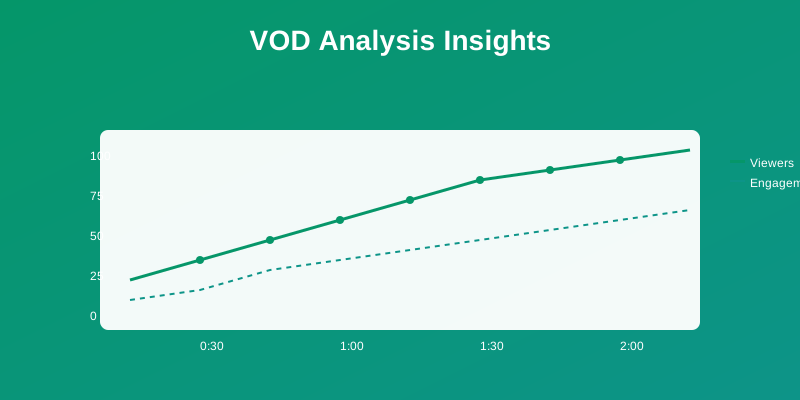
The Power of VOD Analysis: Learn from Every Stream
Your past broadcasts are goldmines of improvement opportunities. VOD (Video on Demand) analysis is one of the most underutilized tools in a streamer’s arsenal, yet it’s arguably the most powerful way to level up your content.
Why VOD Analysis Matters
Most streamers focus entirely on their next stream without learning from their previous ones. This is like trying to improve at a sport without ever watching game footage. VOD analysis helps you:
- Identify peak engagement moments and replicate them
- Spot content gaps where viewers lose interest
- Improve your commentary and reaction timing
- Optimize your streaming schedule based on audience behavior
- Develop your unique streaming personality
What to Look for in Your VODs
1. Audience Retention Patterns
Watch your viewer count graph throughout the stream:
Positive Indicators:
- Steady growth throughout the stream
- Spikes during specific activities or games
- Viewers staying through transitions
- High retention during breaks
Warning Signs:
- Sharp drops at specific moments
- Gradual decline throughout the stream
- Mass exodus during certain content
- Low retention during key moments
2. Chat Engagement Analysis
Review chat activity alongside your content:
- High engagement periods: What were you doing when chat was most active?
- Dead chat moments: Identify what caused conversation to stop
- Question response time: How quickly did you acknowledge chat?
- Community building: Did you create memorable moments with viewers?
3. Content Quality Assessment
Evaluate your content objectively:
Audio Quality:
- Can you hear yourself clearly?
- Is background noise distracting?
- Are audio levels consistent?
- Do you speak clearly and at good volume?
Visual Quality:
- Is your camera positioned well?
- Is lighting adequate?
- Are overlays readable and not distracting?
- Does your gameplay capture look crisp?
Commentary Quality:
- Are you filling dead air effectively?
- Do you explain your thought process?
- Are you entertaining during slow moments?
- Do you balance gameplay focus with chat interaction?
Advanced Analysis Techniques
The 15-Minute Rule
Watch 15-minute segments from different parts of your stream:
- Opening: How do you hook new viewers?
- Middle: Do you maintain energy and engagement?
- Ending: How do you wrap up and encourage return visits?
Viewer Journey Mapping
Track a hypothetical new viewer’s experience:
- First 30 seconds: Would they stay based on this impression?
- First 5 minutes: Do they understand what you’re about?
- First 15 minutes: Have you given them a reason to follow?
Peak Moment Analysis
Identify your stream’s highest points:
- What game or activity were you doing?
- What was your energy level like?
- How were you interacting with chat?
- What made this moment special?
Tools for VOD Analysis
Built-in Platform Analytics
Twitch Creator Dashboard:
- Stream summary statistics
- Viewer retention graphs
- Chat activity metrics
- Follower conversion rates
YouTube Analytics:
- Audience retention graphs
- Traffic source analysis
- Engagement metrics
- Demographic insights
Third-Party Analysis Tools
StreamerXP:
- AI-powered content analysis
- Detailed engagement breakdowns
- Personalized improvement recommendations
- Chat sentiment analysis
StreamLabs:
- Performance tracking
- Goal monitoring
- Revenue analytics
- Growth metrics
Manual Analysis Methods
The Notebook Method:
- Keep a streaming journal
- Note what worked and what didn’t
- Track viewer feedback
- Record improvement ideas
The Timestamp Technique:
- Mark interesting moments during live streams
- Review these specific timestamps later
- Create a highlight reel of best moments
- Study what made them successful
Creating an Analysis Routine
Weekly Review Process
Step 1: Data Collection (30 minutes)
- Export analytics from your streaming platform
- Note any significant events or changes
- Gather viewer feedback from chat logs or social media
Step 2: Content Review (60 minutes)
- Watch key segments from each stream
- Focus on high and low engagement periods
- Take notes on improvement opportunities
Step 3: Pattern Recognition (15 minutes)
- Look for trends across multiple streams
- Identify your most successful content types
- Note recurring issues or challenges
Step 4: Action Planning (15 minutes)
- Set specific goals for the next week
- Plan content improvements
- Schedule any necessary equipment upgrades
Monthly Deep Dive
Once a month, conduct a comprehensive analysis:
- Compare metrics to previous months
- Analyze long-term growth trends
- Review and update your content strategy
- Set new goals and benchmarks
Common Analysis Mistakes
1. Only Looking at Numbers
Metrics tell part of the story, but not everything. A stream with lower viewer count might have higher engagement quality.
2. Ignoring Negative Feedback
Constructive criticism is valuable. Don’t dismiss viewer complaints—investigate if they’re valid.
3. Overanalyzing Everything
Not every dip in viewership needs explanation. Focus on significant patterns, not minor fluctuations.
4. Comparing to Others
Your growth journey is unique. Compare your current performance to your past performance, not to other streamers.
5. Analysis Paralysis
Don’t spend more time analyzing than creating. Set limits on your review time and focus on actionable insights.
Turning Analysis into Action
Content Optimization
Based on your analysis:
- Double down on content that performs well
- Experiment with variations of successful formats
- Eliminate or improve consistently poor-performing segments
- Schedule your best content during peak audience times
Technical Improvements
Address recurring technical issues:
- Upgrade equipment that’s limiting your quality
- Optimize your streaming setup based on viewer feedback
- Improve your overlay design for better readability
- Enhance your audio setup for clearer communication
Skill Development
Focus on areas needing improvement:
- Practice commentary during offline time
- Work on your reaction timing and authenticity
- Develop better chat reading and response habits
- Improve your game skills if they’re holding back content
Building a Feedback Loop
Viewer Surveys
Regularly ask your community:
- What content do they enjoy most?
- What would they like to see more of?
- How can you improve their viewing experience?
- What other streamers do they watch and why?
A/B Testing
Experiment with different approaches:
- Try different streaming times
- Test various game genres
- Experiment with different overlay designs
- Compare different interaction styles
Community Involvement
Make your audience part of the improvement process:
- Share your goals and ask for support
- Create polls about content direction
- Ask for honest feedback during streams
- Celebrate improvements with your community
Long-term Growth Strategy
Setting Benchmarks
Establish clear metrics for success:
- Average viewer count goals
- Engagement rate targets
- Follower growth objectives
- Revenue milestones
Quarterly Reviews
Every three months:
- Assess progress toward annual goals
- Adjust strategies based on what you’ve learned
- Set new challenges and objectives
- Celebrate achievements and learn from setbacks
Evolution and Adaptation
Your content should evolve as you grow:
- Adapt to platform changes and new features
- Respond to shifts in your audience’s interests
- Incorporate new games and trends thoughtfully
- Maintain your core identity while allowing for growth
Conclusion
VOD analysis is your secret weapon for continuous improvement. It transforms streaming from a purely creative endeavor into a data-informed craft. By regularly reviewing your content, understanding your audience, and acting on insights, you’ll see consistent growth in both your skills and your community.
Remember: every successful streamer has bad moments in their VODs. The difference is that they learn from them instead of ignoring them. Start small with weekly reviews, be honest about your performance, and always focus on providing value to your viewers.
Your past streams are lessons waiting to be learned. Start analyzing them today, and watch your future streams reach new heights.
Ready to supercharge your VOD analysis? StreamerXP’s AI-powered insights can automatically identify your best moments, engagement patterns, and improvement opportunities, saving you hours of manual review time.
Related Posts
You might also be interested in these articles
What Top Streamers Do Differently: A Data-Driven Look at Engagement on Twitch
We analyzed hundreds of Twitch streams to find what separates top creators from beginners. See how pros talk, engage chat, and boost energy per hour.
Stay Updated
Get the latest streaming tips and insights delivered to your inbox. Join our community of streamers!
No spam, unsubscribe at any time.